
When selecting an automatic glassware washer for laboratory, do you feel overwhelmed? With the wide range of brands and models on the market, a high-quality glassware washer is not just a cleaning tool but a crucial element of your lab’s quality system. At Xipingzhe, we believe that the right equipment should align with your needs and operate efficiently and economically for years to come.
To assist you in making the best choice, we have compiled this detailed purchasing guide to help you clarify your thinking and find the “perfect” machine for your laboratory.
Step 1: Internal Insights — Define Your Core Cleaning Needs
Before evaluating specific models, please answer the following questions about your laboratory:
Cleaning Throughput and Efficiency: Calculate the total number of vessels that need to be cleaned daily or during peak periods. This will determine whether you need a tabletop, vertical, or conveyor-type machine, helping you avoid glasswarenecks in your workflow.
Vessel Types and Complexity: Are your laboratory vessels varied in type? Consider the inner diameter, depth, and bottom structure of test tubes, pipettes, volumetric flasks, and Erlenmeyer flasks, as these factors will influence cleaning performance.
Contaminant Characteristics: Identify the common contaminants you need to remove, such as water-soluble crystals, stubborn oils, protein residues, or cell culture materials. Different types of contaminants require different combinations of detergents and temperature settings.
Step 2: External Evaluation — Focus on the Core Features and Technologies of glassware Washers
Once you’ve clarified your needs, you can assess the performance and capabilities of the washer based on the following critical factors:
Spray Technology:
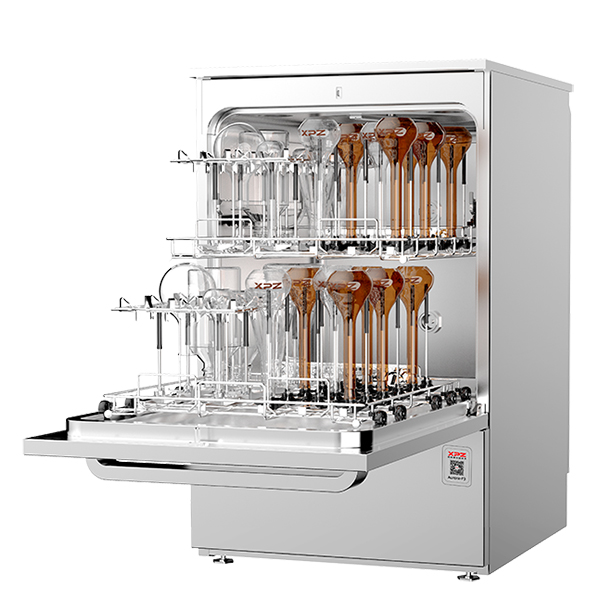
The effectiveness of cleaning depends on whether the water flow can cover every corner of the vessel. Xipingzhe automatic glassware washers feature a triple planetary rotating spray arm technology, simulating a planetary orbit with both rotational and translational motion, creating a multi-dimensional wraparound water flow. This ensures thorough cleaning of the interior and exterior surfaces of vessels, especially hard-to-reach blind spots and deep cavities.
Heating, Control, and Energy Efficiency:
Heating and Temperature Control: Understand the heating power and temperature range of the equipment. Xipingzhe‘s machines are equipped with intelligent temperature control systems that maintain the required cleaning and drying temperatures with precision.
Control System: The control system is the “brain” of the machine. Depending on your needs, you can choose from basic micro-computer control to advanced touchscreen interfaces. Xipingzhe also offers Siemens PLC control systems, which comply with GMP standards, meeting stringent requirements for process standardization and validation.
Validation and Data Traceability: Crucial for regulated laboratories.
Cleaning Validation: Inquire whether the supplier can provide professional cleaning validation support (e.g., validation plans, riboflavin testing). This serves as direct evidence of the washer’s cleaning effectiveness.
Data Traceability: The machine should be capable of automatically and fully recording key process parameters (temperature, pressure, time, conductivity, detergent usage, etc.) for each cleaning cycle. Xipingzhe’s glassware washers come with a built-in data traceability system, generating GMP-compliant audit trails that ensure regulatory compliance during quality audits.
After-Sales Service and Long-Term Costs: The invisible “investment value.”
Service Network: Even the best equipment requires reliable after-sales support. Understand the supplier’s service network coverage, response speed, and spare parts availability to ensure quick resolution of issues.
Long-Term Operating Costs: The initial purchase cost is only one part of the equation. Pay attention to long-term costs, such as water, electricity, and detergent consumption. Xipingzhe’s machines utilize water-saving technology, intelligent temperature control, and precise liquid injection systems to significantly reduce daily operational costs.
Step 3: Hands-On Experience — The Final Step to Making an Informed Decision
Test the Equipment: If possible, attend trade shows or request on-site demonstrations. Hands-on operation allows you to evaluate whether the user interface is intuitive, whether the vessel rack system is convenient, and whether the machine’s noise level is acceptable. These factors can greatly affect your overall satisfaction with the equipment.
Check Industry Reputation: Before finalizing your decision, consult with peers or search online forums for feedback from users of the brand and model you are considering. Long-term user reviews are a reliable measure of the machine’s reliability and the quality of after-sales service.
Why Xipingzhe is Your Trusted Choice
When you apply the above guidelines to your search, you will find that Xipingzhe automatic laboratory glassware washers excel in every aspect:
Complex Vessels: Our triple planetary rotating spray arm technology ensures standardized cleaning for a variety of vessels.
Compliance and Traceability: We offer GMP-compliant control systems and complete data recording capabilities.
Long-Term Benefits: Our energy-efficient design and low consumable costs will continue to save you money over time.
Reliable Support: Our extensive service network and fast response system ensure you are always supported.
We understand that selecting a glassware washer is choosing a long-term work partner. We hope this guide helps you establish a clear evaluation framework for making the best decision.
Post time: Feb-27-2026