
In modern scientific research, the cleanliness of glassware is the foundation of experimental success. While many labs are transitioning from manual to automated processes, many questions remain. At Hangzhou Xipingzhe Instruments Technology Co., Ltd., we have compiled this comprehensive Q&A guide to help you optimize your laboratory hygiene.
1. Why Switch from Manual to Automated Cleaning?
Automated glassware washers offer three transformative advantages over traditional manual washing:
-
High Efficiency & Time-Saving: A single cycle can clean hundreds of items in just 30 minutes, significantly reducing labor costs and freeing researchers for more critical tasks.
-
Safety & Environmental Protection: Automation prevents personnel from coming into direct contact with hazardous residues and harsh chemicals. It also minimizes the risk of cross-contamination and accidental breakage.
-
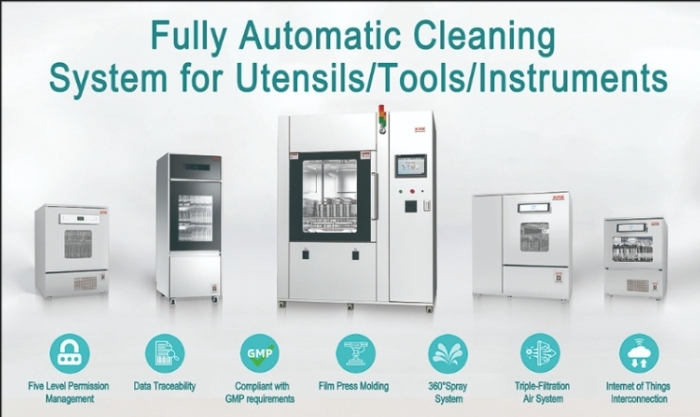
Consistent, Traceable Results: Utilizing $360^{\circ}$ high-pressure spray technology and high-temperature water circulation, our washers ensure no “blind spots.” Every cleaning cycle is recorded and traceable, meeting the strictest laboratory management standards and audit requirements.
2. How to Choose the Right Model for Your Lab?
Selecting the right machine depends on your laboratory’s throughput, space, and specific research field.
-
Single-Layer Models (e.g., Moment Series): Ideal for educational labs or small R&D units. These compact units occupy $\le 0.5\text{m}^{2}$ and can wash 20-400 small vessels per cycle.
-
Under-Counter Designs (e.g., Glory Series): Perfect for space-saving. These can be seamlessly embedded into existing laboratory cabinetry to maintain a streamlined workspace.
-
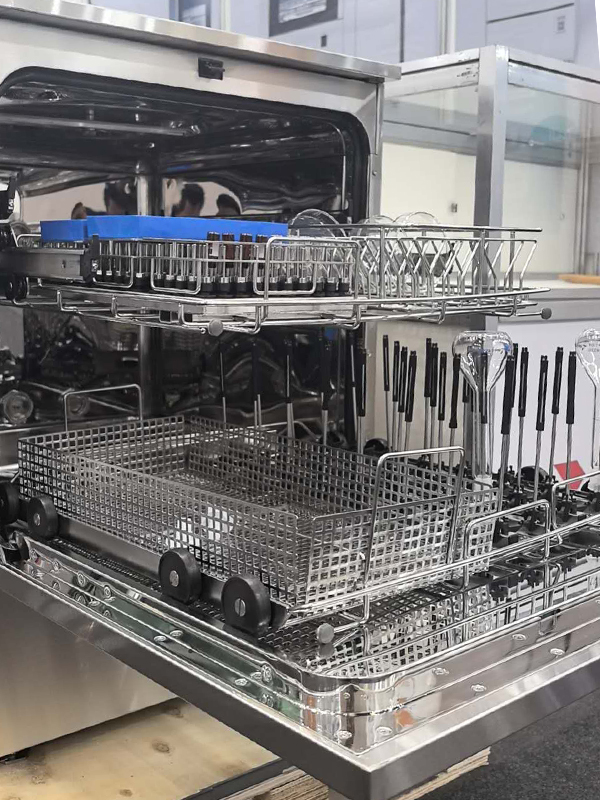
Double-Layer Models (e.g., Aurora-F3): The top choice for mid-sized labs. They support tiered cleaning of different vessel types, handling 40-800 standard items per load.
-
Triple-Layer Models (e.g., Flash-F3 Series): Designed for pharmaceutical companies and third-party testing agencies with high-volume needs. A single cycle can clean 108 250mL volumetric flasks or up to 1200 2mL chromatography vials.
3. Choosing the Right Detergent: Original vs. Third-Party?
Selecting the correct cleaning agent requires a balance between “cleaning power” and “equipment compatibility.”
-
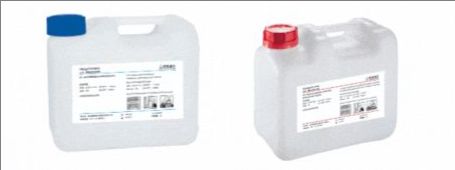
The Advantage of Original Detergents (e.g., AL/ANL Series): Xipingzhe detergents are specifically formulated for lab contaminants. They are precisely matched to our machines’ spray pressure and water temperature settings to ensure peak performance.
-
Using Third-Party Alternatives: If you choose a third-party detergent, ensure it meets these three criteria:
-
It must be specifically formulated for automated lab washers (not household or manual soap).
-
It must be non-foaming (surfactant-free) to prevent machine errors caused by excessive bubbles.
-
Perform a small-sample test first to ensure it does not damage your glassware or the machine’s internal components over time.
-
Do you have more questions about laboratory cleaning technology?
Leave your questions in the comments below or contact our technical team directly. We will address your specific challenges in our next expert guide!
[Contact Xipingzhe for a Professional Consultation]
Post time: Apr-15-2026