
Ensuring Unobstructed Hydraulic Flow
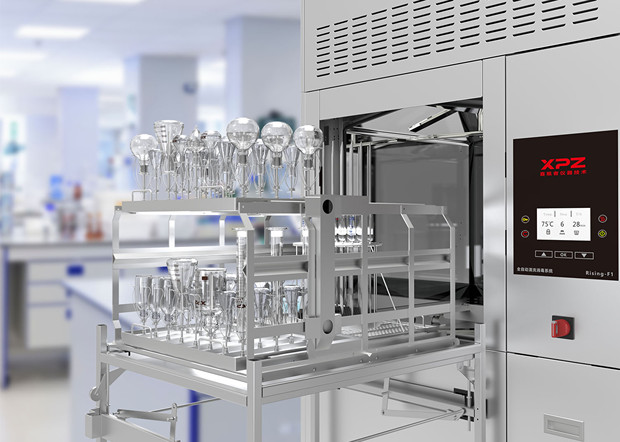
In an automatic laboratory glassware washer, cleaning efficacy relies on continuous hydraulic mechanical force and fluid velocity. The spray arms, injection nozzles, and circulating water lines form the core hydraulic delivery system. Over extended operational cycles, mineral scaling , insoluble reagent precipitates, and microscopic glass shards can accumulate inside fluid channels.
Blockages restrict flow rate, create cleaning blind spots, and degrade wash quality. This guide provides a systematic technical protocol for diagnosing, clearing, and maintaining the hydraulic delivery networks of XPZ Laboratory Glassware Washers.
1. Spray System Blockage Troubleshooting and Repair
Blockages in the spray system typically present as uneven spray patterns, reduced water pressure at injection nozzles, or localized dead zones. Left unaddressed, restricted nozzles create uneven mechanical wash forces, leading to lingering residues on internal vessel walls.
-
Diagnostic Protocol: Inspect the upper, middle, and lower spray arms for static positioning or uneven rotation during a cycle. Disconnect power to the unit before performing physical inspections.
-
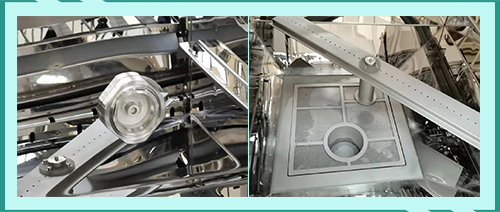
Removal and Disassembly: Unlatch the central retention nut of the XPZ spray arm assembly and remove the arm from its housing hub.
-
Nozzle Clearing: Use a non-abrasive stainless steel pin or compressed air nozzle to clear particulate buildup from individual spray ports. Flush the interior cavity of the spray arm with deionized ($DI$) water to remove dislodged debris.
-
Structural Inspection: Check the rotating hub bearing for physical wear, crack formation, or axial misalignment that could restrict smooth rotation.
-
Reassembly & Functional Validation: Reinstall the spray arms onto their mounting spindles, ensuring the retention mechanism locks securely into place. Run a short, unloaded test cycle to verify 360-degree rotation and uniform spray patterns across all nozzles.
2. Water Circulation Piping Maintenance & Leak Remediation
The circulation piping network delivers heated wash fluid from the main pump to the injection racks. Internal scaling or sediment buildup in these lines narrows the effective pipe diameter, causing low-flow errors or cavitation in the circulation pump.
-
Sectional Pipeline Inspection: Inspect supply, recirculation, and drain lines for mineral buildup or physical kinks.
-
Descaling & Chemical Flushing: For lines with heavy internal scaling, execute an automated maintenance cycle utilizing a validated acidic descaling agent (such as citric acid or specialized scale-removal chemistry).
-
Component Replacement: Inspect flexible hoses for material degradation, micro-fractures, or persistent internal scale that cannot be flushed. Replace compromised piping with factory-spec chemical- and heat-resistant hose assemblies.
-
Seal Integrity Verification: Inspect all quick-connect fittings, O-rings, and clamp couplings. Replace hardened or deformed elastomeric gaskets to prevent fluid leaks and pressure losses within the main pump manifold.
3. Filtration Assembly Inspection and Cleaning
The multi-stage filtration assembly prevents glass fragments, insoluble soils, and particulate matter from entering the recirculation pump and spray arm nozzles. A clogged filter restricts pump intake, reducing overall hydraulic pressure throughout the washer.
-
Primary Screen Cleaning: Remove the coarse chamber filter at the bottom of the wash tub after each operational day. Rinse under running water to clear gross particulates and glass fragments.
-
Fine Mesh Filter Inspection: Inspect the fine micro-filter assembly located at the pump sump inlet. Clean using a soft-bristled brush and an ultrasonic bath if particulate accumulation is severe.
-
Filter Housing Inspection: Check the filter seating ring for debris that might allow unfiltered water to bypass the filtration assembly and enter the circulation loop. Replace damaged or warped filter screens immediately.
4. Preventative Maintenance SOP
Establishing a standardized preventative maintenance protocol minimizes unscheduled downtime, preserves hydraulic pump efficiency, and ensures audit-ready cleaning results.
| Maintenance Task | Frequency | Action Items |
| Chamber Debris Clearance | Daily / Post-run | Remove residual debris, glass shards, and paper labels from the chamber floor. |
| Coarse Filter Inspection | Daily | Remove, inspect, and flush the primary stainless steel filter screen. |
| Spray Arm Port Cleaning | Weekly | Inspect spray nozzles; detach arms and clear any blocked orifices. |
| Full System Descaling | Monthly | Run a hot maintenance cycle with an acid-based descaler to remove internal scale buildup. |
| Hose & Coupling Audit | Quarterly | Inspect internal/external water lines, gaskets, and hose clamps for signs of wear or leakage. |
Conclusion
Systematic maintenance of the spray assembly, fluid piping, and filtration network is essential for maintaining the mechanical wash pressure of XPZ Laboratory Glassware Washers. Following a structured diagnostic sequence—starting with filtration screens, proceeding to spray nozzles, and completing with full-line descaling—ensures stable flow rates, protects circulation pumps, and maintains consistent, validated cleaning performance across all laboratory workflows.
Post time: Aug-07-2026