
Remember the worst part of working in a lab? For me, it wasn’t preparing solutions or running reactions. It was facing a sink full of dirty glassware after an experiment. Just thinking about it is exhausting: mysterious residues clinging to beakers, a sticky layer at the bottom of Erlenmeyer flasks. Scrubbing them clean was a real pain.
Washing under freezing cold tap water in winter left my hands red and raw. Switching between detergent, acid, and alkaline solutions was not only pungent but also harsh on my skin. Scrubbing with brushes, I’d still miss those hard-to-reach corners. The most frustrating part? When everything piled up—I had urgent experiments to run and results to chase, but I was stuck wrestling with a pile of dirty glassware. I’d end up with a sore back, watching precious time slip away. So annoying!
Then our lab got an XPZ automatic glassware washer—a big, square, solid piece of equipment. When it was first installed, I was skeptical. Is this thing really going to work? Is it just a gimmick? Can it really wash as clean as by hand? Especially those stubborn, stuck-on residues.
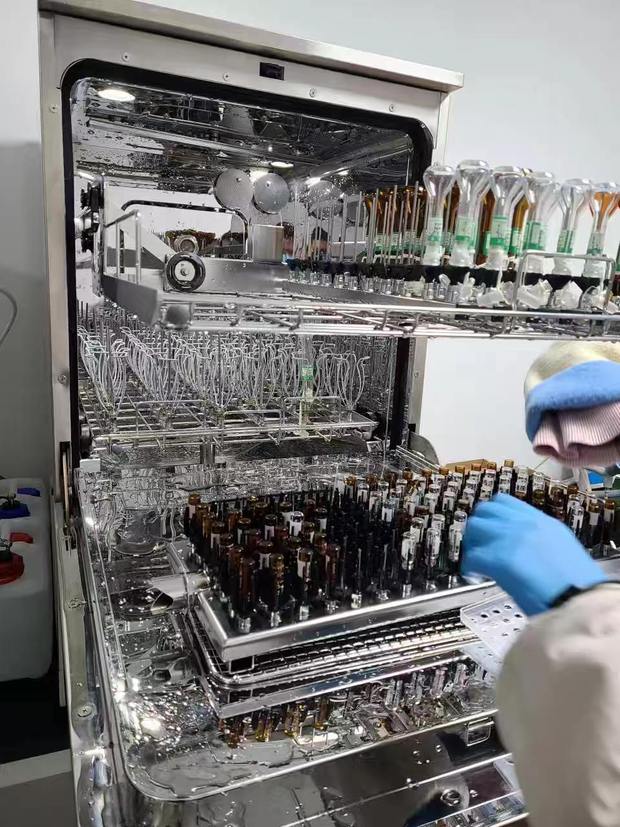
The first time I used it, I had my doubts. Following the manual, I sorted the glassware, placed them upside down on the rack’s pegs, slid the rack in, closed the door, selected a cycle, and pressed start.
With a low hum, the machine got to work. I could hear the water rushing and the spray arms spinning. Peeking through the small round window, I saw jets of water coming from every direction—top, bottom, left, right, no dead corners. The residues that used to take me ages to scrub away were visibly being blasted, dissolved, and washed off.
When it beeped to signal the cycle was finished, I opened the door. Wow! Sparkling clean. No water spots inside or out, let alone any residue. Running my finger around the inside of a flask, I felt that unique, smooth, squeaky-clean feel of perfectly washed glass. It was far cleaner than what I could achieve with hand scrubbing, not to mention my hands were free from worries about chemical residues. It even got into the tricky corners of narrow-neck and volumetric flasks.
From that moment on, I was a convert. Here’s why it’s so great:
- Huge time saver! Washing a batch of glassware by hand used to take at least 30 minutes and left me exhausted. Now? Load, close the door, press a button, and done! I get on with my real work—writing notes, prepping for the next experiment, or even just taking a quick coffee break. The machine does the washing while I do the science.
- Saves effort and spares my hands! No more battling freezing water and harsh chemicals. No more pruney fingers or sore back. The boost in happiness, especially during winter, is immense.
- Genuinely clean, and consistently so! As long as you select the right cycle and use enough detergent, every single piece comes out gleaming. The results are incredibly reliable. No more worrying that being tired one day might affect tomorrow’s results.
- Works wonders on tough residues! The combination of high-temperature water, powerful water pressure, and specialized detergents handles even the most stubborn residues that would make you question your life choices if you were scrubbing by hand.
- Peace of mind! Especially for sensitive experiments or contamination-sensitive samples, knowing that the glassware has been through a machine-controlled, high-temperature wash (and dry, depending on the model) is far more reassuring than handwashing.
Now, this machine is the workhorse of our lab. After an experiment, everyone automatically brings their dirty glassware over. Fill the rack, press the button, done! Hearing it humming away in the corner feels incredibly reassuring—like someone (or rather, something) is silently taking care of the most tedious part of the job.
You might think it’s expensive, takes up space, and doubt its effectiveness before buying one. But once you’ve used it, there’s only one thought: why didn’t I get this sooner? Washing glassware? Just leave it to the washer. It’s a total game-changer.
Post time: May-26-2026