
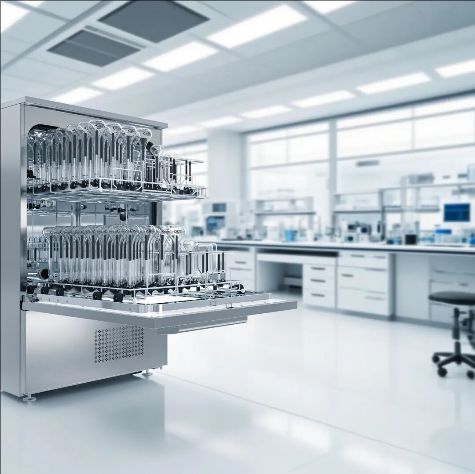
Ensuring Peak Performance in the Lab An automatic laboratory glassware washer is a critical asset for maintaining workflow efficiency and sample integrity in chemistry, biology, and medical laboratories. While XPZ systems are engineered for long-term reliability, extended operational periods under demanding laboratory conditions can occasionally lead to technical issues. Establishing a structured protocol for fault diagnosis and preventative maintenance is essential to preventing unexpected downtime and securing consistent cleaning results.
1. Common Operational Faults
Understanding the primary failure modes allows laboratory technicians to identify and address performance drops quickly:
-
Suboptimal Cleaning Results: Often manifested as visible residue or water spots, this issue is typically caused by clogged spray nozzles, spray arm blockages, or insufficient water pressure.
-
Failure to Initialize/Start: If the unit does not power on, the root cause generally stems from external power supply disruptions, control circuit faults, or primary motor failures.
-
Abnormal Water Flow: Restricted fluid dynamics, irregular water pressure, or inconsistent flow volumes usually indicate a blocked internal pipeline or a failing circulation pump.
-
Leakage and Hose Ruptures: Aging components, loose fittings, or structural micro-cracks in hoses and seals can lead to water leakage, posing safety risks to the surrounding lab environment.
-
Excessive Noise Levels: Unusual grinding or rattling sounds during operation typically point to mechanical friction in the motor or pump, bearing wear, or a lack of proper lubrication.
-
Temperature Anomaly: When the system fails to reach preset thermal parameters, the cleaning and disinfection efficiency is compromised, pointing to an issue with the heating elements.
2. Technical Fault Diagnosis Methods
A systematic diagnostic approach ensures rapid troubleshooting without compromising sensitive electronics:
-
Electrical and Control Circuit Verification: If the washer fails to start, verify the main power feed using a digital multimeter to ensure incoming voltage meets technical specifications. Inspect the control panel and printed circuit boards (PCBs) for loose contacts or burned components.
-
Hydraulic System and Pump Inspection: For flow-related issues, inspect internal lines for chemical scale or debris accumulation. Clean the piping using appropriate descaling agents and verify that the circulation pump impeller rotates freely.
-
Spray Arm and Nozzle Calibration: Detach the spray arms and inspect each nozzle orifice. Use a fine needle tool to clear particulates, and replace any spray arms showing physical wear or distorted spray patterns.
-
Heating Element Assessment: For thermal control errors, isolate the heating elements and measure their electrical resistance with a multimeter. Out-of-range resistance values necessitate an immediate component replacement.
-
Water Level Sensor Testing: Faulty level switches or sensors cause incorrect water fill cycles. Clean the sensor probes of any film buildup and verify the integrity of their electrical connections to the main controller.
-
Leak Localization: Conduct a visual inspection of all water inlets, pump seals, drainage valves, and door gaskets under pressurized cycle conditions to isolate and replace degraded sealing elements.
3. Proactive Maintenance Strategies
Implementing a structured preventative maintenance schedule extends the lifespan of your XPZ equipment and minimizes total cost of ownership:
-
Routine Cleaning and Descaling: Periodically clean the fine filters, injection nozzles, and chamber walls to prevent the accumulation of hard water scale and chemical residues that degrade hydraulic throughput.
-
Electrical System Audits: Inspect power cords, contactors, relays, and motor terminals during scheduled maintenance windows to identify loose connections before they cause short circuits.
-
Mechanical Component Lubrication: Moving parts, including specialized pump bearings and mechanical linkages, require periodic inspection and lubrication with laboratory-grade lubricants to prevent thermal strain and mechanical wear.
-
Feed Water Quality Control: Cleaning performance is directly affected by water hardness. Regularly monitor input water quality and utilize water softeners or reverse osmosis (RO) purification systems to protect internal components from scale buildup.
-
Consumable Replacement Schedules: Establish a fixed replacement cycle for high-wear parts. Gaskets, door seals, filters, and flexible hoses should be inspected monthly and replaced at least annually under normal operating frequencies.
-
Operator Training and Daily Checklists: Train laboratory staff on standard operating procedures (SOPs) and basic pre-run checks. Early reporting of slight variations in noise or cycle times prevents minor issues from escalating into major hardware failures.
Conclusion The reliability of an XPZ laboratory glassware washer depends on a combination of robust engineering and rigorous operational care. By adhering to standardized diagnostic methods and a disciplined maintenance schedule, laboratory managers can significantly lower fault frequencies, optimize energy consumption, and ensure a safe, high-throughput environment for critical research.
Post time: Jun-16-2026